

 0449 987 271
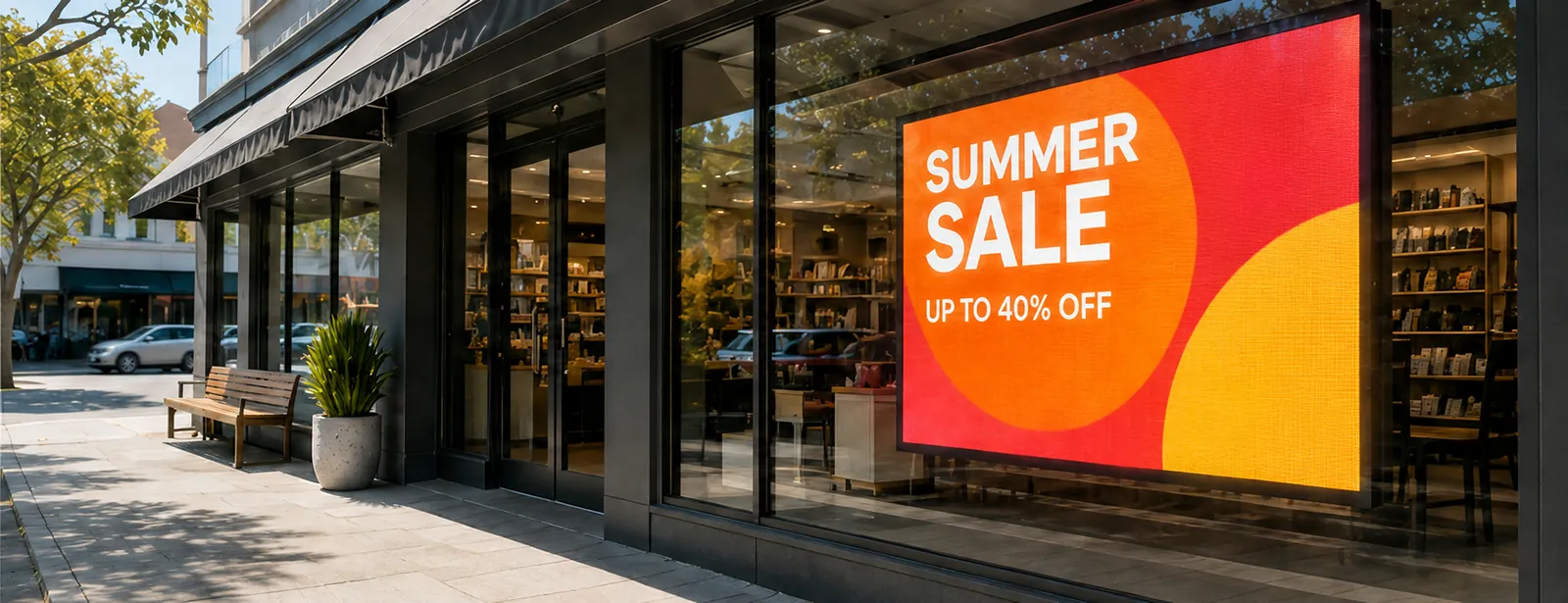
Choosing a display for a shopfront is not simply a question of which technology is “best”. The right option depends on what people need to see, how far away they are, how much daylight the display is competing with, how often the content changes and how large the display needs to be.
A printed lightbox, an LCD screen and a direct-view LED screen can all work well — but they solve different problems.
For a street-facing business, the differences become much more important once the display has to compete with daylight, attract attention from further away or show changing advertising throughout the day.
This guide explains where each option makes sense, where the trade-offs start to appear, and why direct-view LED is often particularly well suited to high-visibility shopfront and awning applications.
The short answer
Lightbox: fine for a fixed graphic that rarely changes.
TV / LCD: strong for close-range detail indoors. A daylight-readable LCD is a very different product category – specialist & much higher-cost.
Direct-view LED: the strongest option when you need daylight visibility, changing content, a larger or custom size, and real impact from the street.
Where each option fits
Each display type has its strengths. Here's how the main options compare in a shopfront context.
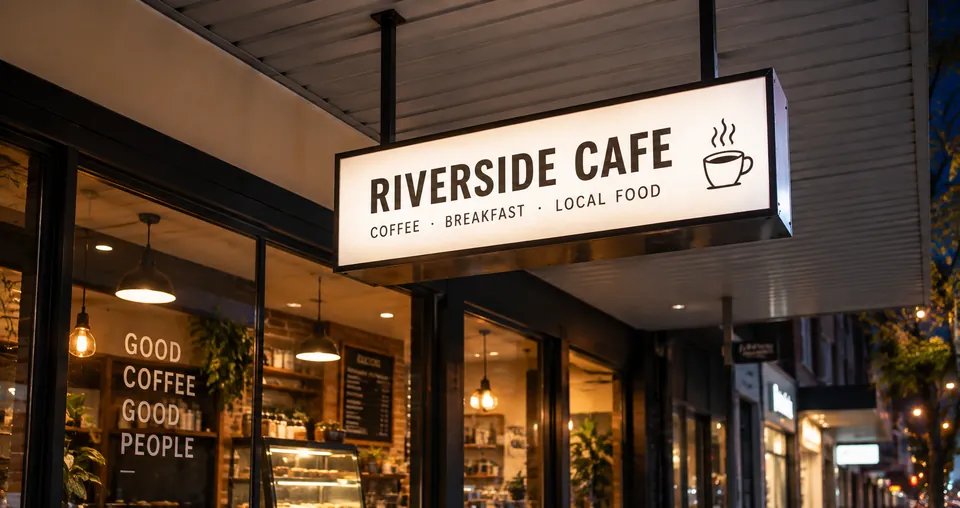
Lightboxes

Suit a permanent logo, a long-term menu or a static brand image that rarely changes.

Limited to printed content — no video, motion or quick content changes.
Every new promotion, price, seasonal campaign or product means printing and installing new artwork.
Can be bright and large, but can never become changing advertising.
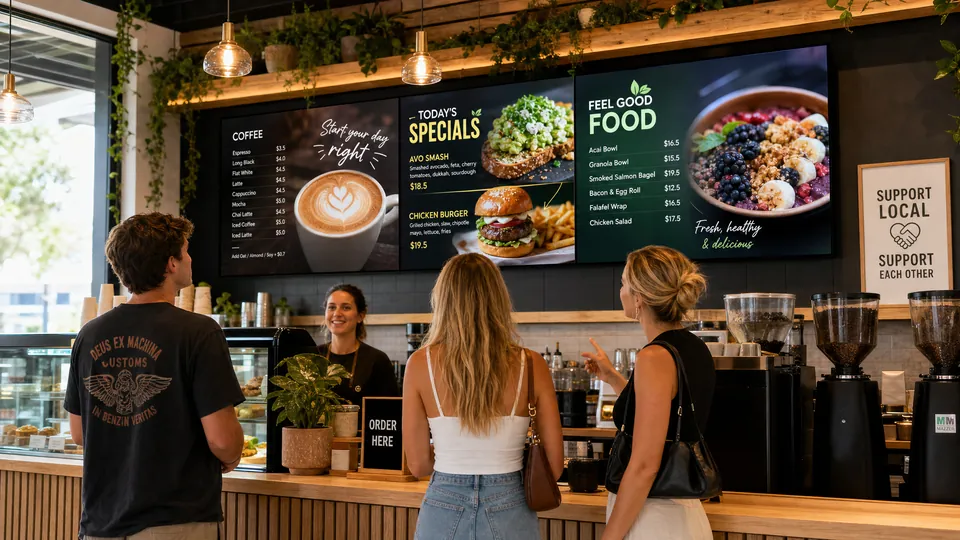
TV and LCD screens
Good for close-range detail indoors: reception areas, waiting rooms, detailed menus and directories.
Shopfront problem: daylight visibility. Behind a front window, a screen competes with direct sun, bright sky and glass reflections.
Standard TVs and LCDs that look sharp inside can look washed out and barely noticeable from the street.
The hidden cost of high-brightness LCD: specialist window-facing LCDs solve part of that problem, but with much brighter panels and extra cooling, they sit in a far higher price category than a TV. “LCD is cheaper than LED” only holds when LED is being compared with a screen that can't do the job.
Daylight-readable commercial displays are possible, but usually cost more than standard indoor TVs.
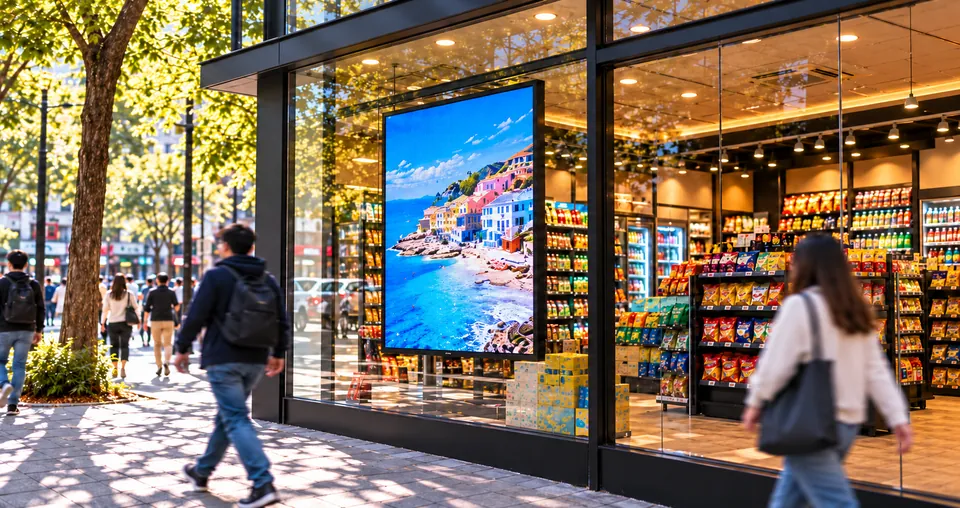
Direct-view LED screens
Combines brightness, scale, flexible dimensions, long-distance visibility and dynamic content in one display.
Built for daylight — LEOLED commercial LED screens are 5000+ nits, up to 10× the brightness of a standard indoor TV.
Seen from further away — screen size and pixel pitch are matched to how far away people are, whether walking or driving past.
Built to the space — modules are configured to your width and height, for wide shopfronts, awnings, pylons and non-standard shapes.
Supports dynamic content — images, video, prices and promotions update without reprinting and can be changed at any time.
Creates real street-facing impact.
Shopfront window LED vs awning LED
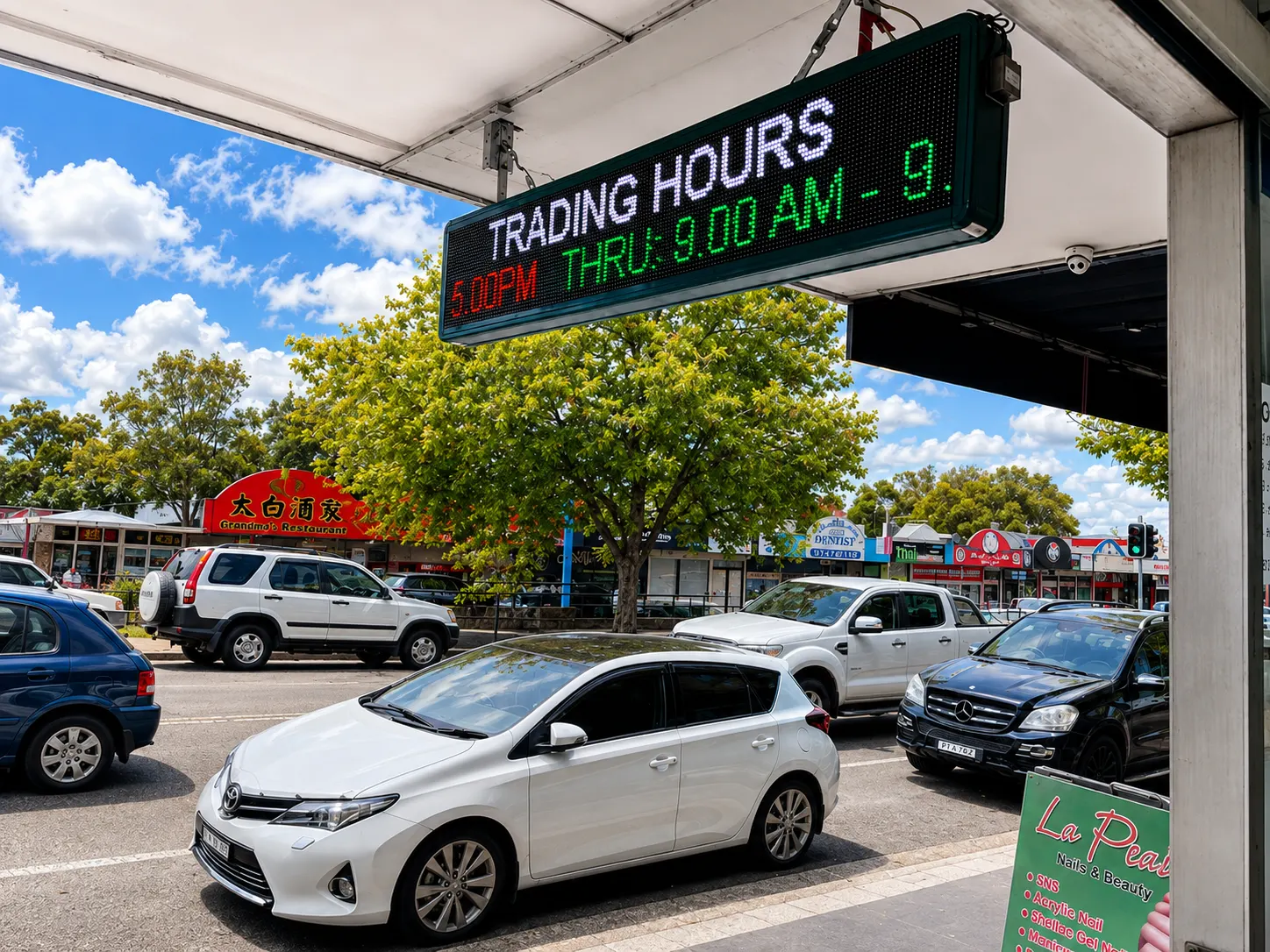
A shopfront window is not the only useful position for a digital LED screen. For some businesses, the awning is an even more visible advertising position.
Mounted beneath the awning, the screen sits right in the pedestrian sightline without taking up window space. It can be double-sided, reaching people approaching from both directions, and with no glass in front of it, there are no window reflections to fight.
- Double-sided visibility
- Seen by both foot and vehicle traffic
- Not affected by glass reflections
- Perfect for dynamic content, images, videos and promotions
Weather exposure, mounting, power and viewing angle are all worked out when the screen is specified.
Side-by-side comparison
A quick way to see how each option stacks up for a shopfront.
| Feature | Lightbox | Standard TV / LCD | High-brightness LCD | Direct-view LED |
|---|---|---|---|---|
| Fixed graphics |  Best Best | | | |
| Images & video |  | | | |
| Easy content changes | | | | |
| Close-up fine detail | Good | Best | Best | Very good |
| Bright shopfront visibility | Fair | Poor | Good | Excellent |
| Cost to achieve daylight visibility | Low (static only) | Low, but often ineffective | Very high | Better value |
| Large-format display | Limited | Limited | Limited | Excellent |
| Custom dimensions | Limited | Standard sizes only | Standard sizes only | Highly flexible |
| Longer viewing distances | Fair | Poor | Good | Excellent |
| Double-sided awning use | Static only | No | No | Yes |
| Dynamic promotions | No | Yes | Yes | Yes |
| Best use | Static graphics | Indoor / close range | Bright indoor / semi-outdoor | Shopfront & outdoor impact |
Six questions to ask before you choose
Instead of focusing only on the technology, ask these questions first.
How much daylight?
Brighter environments need brighter displays. For a shopfront, this is usually the deciding factor.
How far away?
The greater the distance, the larger and brighter the display needs to be.
How much detail?
Closer viewing needs a finer pixel pitch. A strong offer, price, product image or video works extremely well on LED.
How often does content change?
A message that never changes may suit a lightbox. Video content or anything that changes frequently needs a digital screen.
What size and shape does the space allow?
Your space may call for a custom size. LCD can't be built to size; LED can.
What will people actually be looking at?
Technology should follow the content. Branding, promotions, information or all of the above. The screen should be specified around the real job.
Pixel pitch: smaller is not automatically better
Pixel pitch is the distance between LED pixels. It affects image detail and viewing distance. A smaller pitch gives a finer image for close viewing, but it also costs more.
A shopfront screen viewed from nearby typically suits P2.5 or P4. A larger roadside screen viewed from further away can use a larger pitch very effectively.
The right question isn’t “What is the best pixel pitch?” It’s “What pixel pitch is right for the distance people will actually see this screen from?” That way you don’t pay for resolution nobody can see.
Learn more about LED display specifications →(viewed up close)

Best for closer viewing

Good balance of detail and distance

viewing distances
Real example: replacing a TV in a Thornleigh shopfront
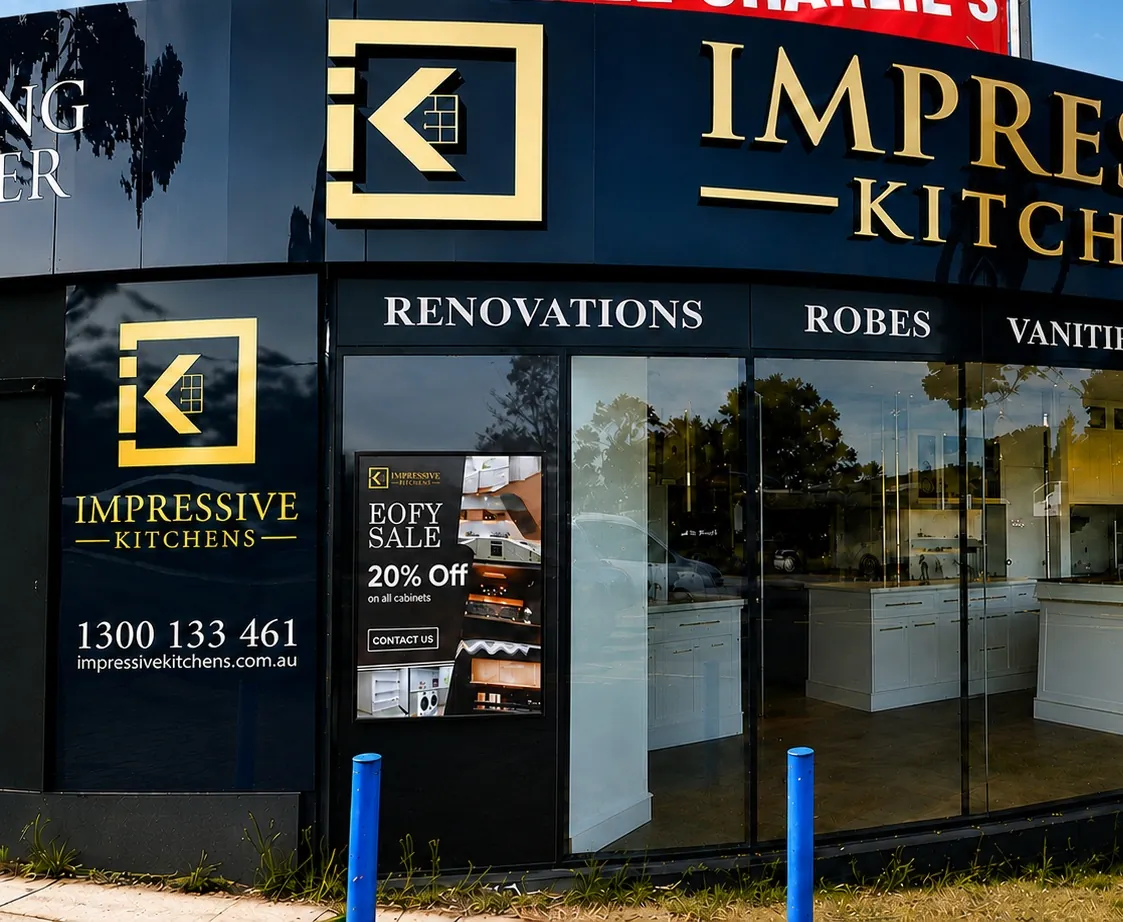
A kitchen and bathroom showroom in Thornleigh had a standard indoor TV in its front window. It looked sharp inside, but from the street during the day it was barely noticeable.
LEOLED replaced it with a P2.5 high-brightness LED shopfront screen: bright, clear and hard to miss from the street, with products and promotions still changing digitally.
See more real LEOLED projects →